
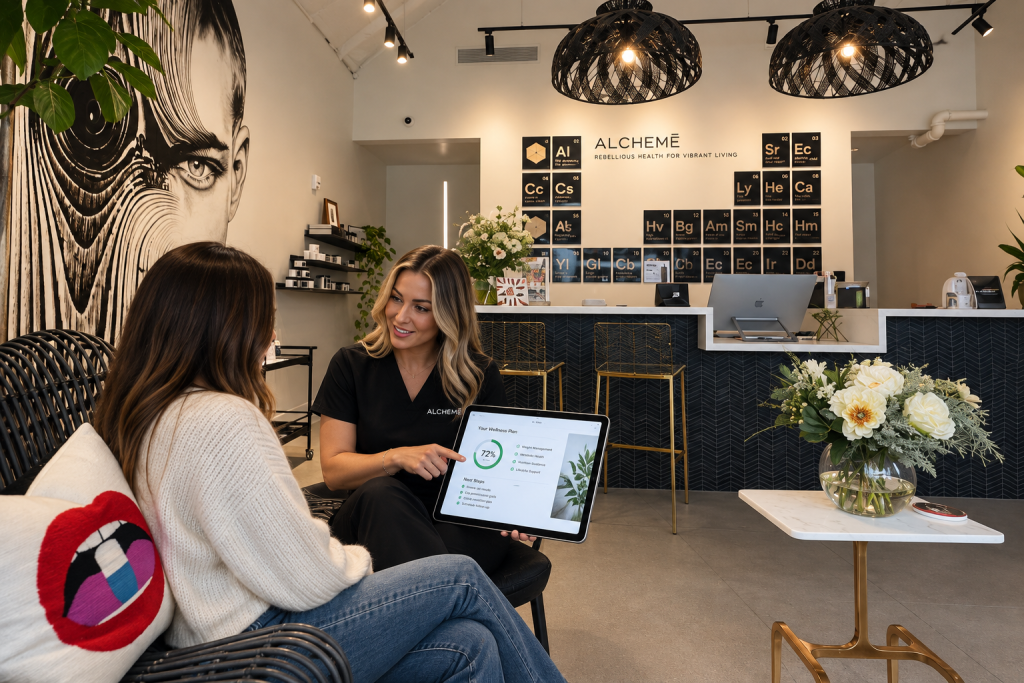
CoolSculpting and weight loss solve two different problems. Weight loss — through diet, exercise, or medical treatments like GLP-1 therapy — shrinks fat cells throughout the body and lowers the number on the scale over time. CoolSculpting doesn’t cause weight loss; it’s a body-contouring procedure that permanently destroys roughly 20–25% of the fat cells in one stubborn area, without meaningfully changing overall body weight.
How This Relates to ALCHEMĒ Medical Spa Del Mar
ALCHEMĒ Medical Spa Del Mar doesn’t offer CoolSculpting, but medical weight loss is central to the practice. Its Del Mar location builds personalized programs around GLP-1 therapy, GLP-3 therapy, peptide therapy, and NAD+ support — medically supervised options designed to move the number on the scale, not just contour one area. New, first-time patients can currently claim a free weight loss consultation plus $50 off their first treatment; some exclusions may apply.
Quick Takeaways
- Weight loss shrinks fat cells throughout the body; CoolSculpting permanently removes a portion of fat cells in one targeted area — the two aren’t interchangeable.
- CoolSculpting isn’t marketed or FDA-cleared as a weight-loss treatment; most patients see little to no change on the scale even with visible contouring.
- Good CoolSculpting candidates are typically already close to their goal weight and target stubborn pockets of fat that resist diet and exercise.
- GLP-1 medical weight loss programs average roughly 10–15% body weight loss with semaglutide and 15–25% with tirzepatide over 14–18 months, well beyond diet and exercise alone.
- CoolSculpting typically runs $600–$1,500+ per treated area per session, with full multi-session plans often reaching $1,800–$4,000 or more; sources vary widely on the average.
- ALCHEMĒ Medical Spa Del Mar offers GLP-1, GLP-3, peptide, and NAD+ weight loss programs — not CoolSculpting or other fat-freezing devices.
What Is CoolSculpting and How Does It Work?
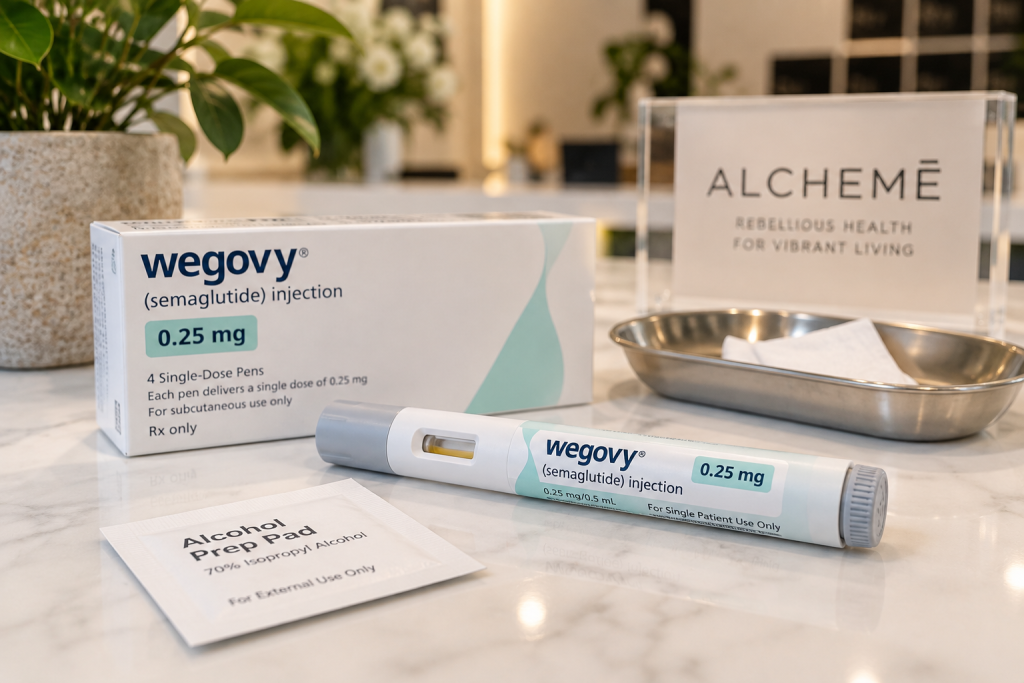
CoolSculpting is an FDA-cleared, non-surgical body-contouring treatment that uses controlled cooling — a process called cryolipolysis — to freeze fat cells beneath the skin in a specific area. Over the following weeks, the body gradually breaks down and eliminates the dead cells through its natural lymphatic processes, leaving the treated area visibly slimmer without surgery, incisions, or real downtime.
A single session typically targets one area — the abdomen, flanks, upper arms, inner or outer thighs, or under the chin — using a vacuum-style applicator. Most patients start noticing changes around four to six weeks after treatment, with full results developing over three to six months as the body finishes clearing the destroyed fat cells. That gradual timeline is one of the clearest differences from surgical liposuction, which removes fat physically during the procedure and shows results within six to twelve weeks.
What’s the Difference Between Fat Reduction and Weight Loss?
Most adults have a relatively fixed number of fat cells by the end of puberty. When you lose weight through diet, exercise, or medication, those existing fat cells shrink—they don’t disappear, and they can enlarge again if you regain weight. CoolSculpting works differently: it actually destroys a portion of the fat cells in the treated area, and the body doesn’t grow new ones to replace them, so the reduction in that specific spot is considered permanent.
In a typical CoolSculpting session, roughly 20–25% of the fat cells in the treated area are eliminated. That’s a meaningful local change, but it’s not the same mechanism as losing weight across the whole body, which is why the two approaches answer different goals rather than competing head-to-head.
Does CoolSculpting Help You Lose Weight?
No. Clinics that perform the procedure are consistent on this point: CoolSculpting is not designed, marketed, or FDA-cleared as a weight-loss treatment, and it isn’t a substitute for diet, exercise, or medical weight management. Patients may notice clothes fitting better and a more contoured silhouette in the treated area, but the number on the scale typically doesn’t move in a meaningful way.
Anyone hoping to lose a significant amount of weight — rather than refine one specific area — is better served by an approach that addresses the whole body: nutrition changes, physical activity, or a medically supervised program using GLP-1 or similar therapies.
Who Is a Good Candidate for CoolSculpting vs. a Medical Weight Loss Program?
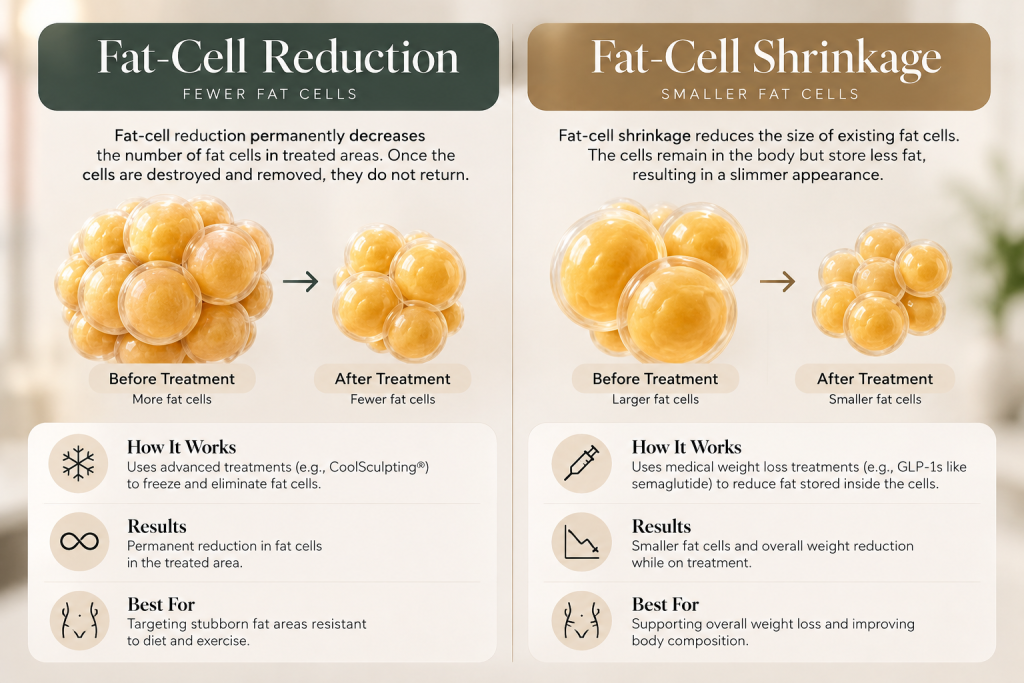
The two approaches start from different places. CoolSculpting candidates are typically adults already close to their target weight — often within about 30 pounds — who are dealing with a specific, stubborn pocket of fat, such as love handles, a lower belly pooch, or a double chin, that hasn’t responded to diet and exercise. It’s a cosmetic refinement tool, not a starting point for anyone carrying substantial excess weight.
A medical weight loss program is the better fit for someone who wants to reduce overall body weight, especially if lifestyle changes alone haven’t produced lasting results. GLP-1 and GLP-3 therapies mimic natural hormones that regulate appetite and blood sugar, which is why they tend to produce more substantial, whole-body results than a localized fat-reduction procedure.
| Situation | Better Fit |
|---|---|
| Close to goal weight, one stubborn area (belly, flanks, chin, arms) | CoolSculpting or another body-contouring treatment |
| Meaningful overall weight to lose | Medically supervised weight loss (GLP-1, GLP-3, peptide therapy) |
| Want a non-invasive option with no ongoing medication | CoolSculpting |
| Want appetite control and metabolic support alongside lifestyle changes | Medical weight loss program |
| Want both a lower number on the scale and a more contoured shape | A weight loss program first, then contouring once closer to goal weight |
How Much Does CoolSculpting Cost Compared to a Medical Weight Loss Program?
CoolSculpting Pricing
CoolSculpting pricing varies significantly by source, treatment area, and provider. Per-area session costs are commonly reported in the $600–$1,500+ range, with smaller areas like the upper arms or chin running lower (roughly $650–$1,450) and larger areas like the abdomen or thighs running higher; full multi-session treatment plans often total $1,800–$4,000 or more. Some sources, including figures attributed to CoolSculpting’s own site, cite a higher national average near $2,100–$4,100 per session, while the American Society of Plastic Surgeons has tracked average per-treatment fees closer to $1,100–$1,500 in recent years. Because these figures diverge this widely, treat any single number as a starting estimate rather than a fixed price, and confirm current pricing directly with a provider.
Medical Weight Loss Program Pricing
Medical weight loss programs are typically billed differently — as ongoing monthly care that combines provider visits, monitoring, and (where applicable) medication. As of mid-2026, GLP-1 medications like Wegovy and Zepbound carry list prices in the roughly $1,000–$1,350 per month range, but most patients don’t pay that: manufacturer self-pay programs have brought cash prices for uninsured patients down to approximately $200–$500 per month depending on the drug and dose, and patients with supportive insurance and a savings card can pay as little as $25 per fill. Program fees for coaching, monitoring, and provider visits are typically separate from medication costs and vary by practice.
What Are the Risks and Limitations of CoolSculpting?
CoolSculpting is non-invasive, but it isn’t risk-free. Reported side effects include temporary redness, bruising, swelling, tugging sensations, and tenderness in the treated area, most of which resolve within days to a couple of weeks. It’s not appropriate for every treatment area — CoolSculpting isn’t approved for the face itself, though it can be used on the jawline and chin — and results depend heavily on realistic candidate selection.
The bigger limitation is expectation management: because CoolSculpting removes only about a quarter of fat cells in one area and does nothing for the rest of the body, it won’t meaningfully change someone’s weight, BMI, or overall silhouette if the goal is broader weight loss.
Is a Medical Weight Loss Program Worth It Compared to a Body-Contouring Procedure?
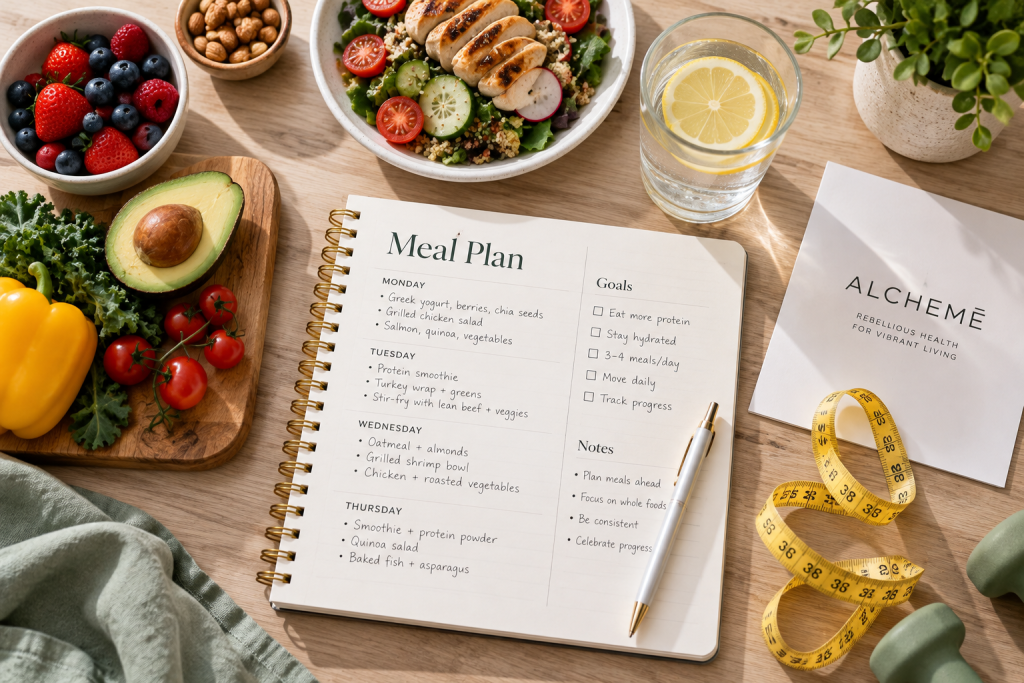
For someone whose primary goal is a lower number on the scale and improved metabolic health, a medically supervised weight loss program is generally the more direct path — clinical trial data on GLP-1 and tirzepatide-based therapies show average body weight reductions in the 10–25% range over roughly a year and a half, compared to about 3–5% typically seen with diet and exercise alone over a similar period. CoolSculpting doesn’t compete on that metric; it isn’t designed to.
For someone who has already lost weight, or who is naturally close to their goal but has one area that hasn’t responded to lifestyle changes, a body-contouring treatment like CoolSculpting can be a reasonable next step — often after, rather than instead of, a broader weight loss plan.
What Should First-Time Patients Know Before Choosing Either Option?
Anyone considering CoolSculpting should confirm which areas a specific provider treats, how many sessions are typically recommended, and the full price for a complete treatment plan rather than a single session, since most patients need more than one cycle for visible results. Anyone considering a medical weight loss program should ask about eligibility requirements, what lab work or consultation is required upfront, how medication and program fees are billed separately, and what ongoing support (coaching, follow-up visits) is included.
In both cases, a free consultation is the standard first step, and it’s the best opportunity to get treatment-specific numbers rather than relying on national averages.
Frequently Asked Questions
Can I do CoolSculpting instead of losing weight?
Not effectively. CoolSculpting is a body-contouring treatment for people already close to their goal weight who want to address one stubborn area; it isn’t designed to produce meaningful overall weight loss.
How much weight can I expect to lose with a GLP-1 program?
Clinical trial data show average body weight reductions of roughly 10–15% with semaglutide over about 14 months and 15–25% with tirzepatide over about 18 months, though individual results vary by dose, adherence, and starting weight.
Is CoolSculpting permanent?
The fat cells destroyed during treatment don’t return, so results in the treated area are generally considered long-lasting. However, remaining fat cells elsewhere in the body — and in the treated area itself — can still enlarge with significant weight gain.
Does ALCHEMĒ Medical Spa Del Mar offer CoolSculpting?
No. ALCHEMĒ Medical Spa Del Mar’s Del Mar location focuses on medically supervised weight loss (GLP-1, GLP-3, peptide, and NAD+ therapies) along with aesthetic treatments like dermal fillers, RF microneedling, and Morpheus8, rather than fat-freezing body-contouring devices.
Which costs more, CoolSculpting or a medical weight loss program?
It depends on the scope. A single CoolSculpting area might run $600–$1,500+ per session with a one-time (though sometimes repeated) cost, while a medical weight loss program is typically an ongoing monthly expense for coaching and medication — cash-pay GLP-1 medication alone often runs $200–$500+ per month.
Start Your Weight Loss Journey at ALCHEMĒ Medical Spa Del Mar
If your goal is to lose weight rather than refine one specific area, ALCHEMĒ Medical Spa Del Mar’s Del Mar location builds a personalized plan around your health history and goals, using GLP-1 therapy, GLP-3 therapy, peptide therapy, or NAD+ support as needed. New, first-time patients can currently claim a free weight loss consultation and $50 off their first treatment.
If you’re ready to experience personalized, science-backed beauty and wellness, visit Alcheme MedSpa Del Mar location for your first treatment. Be sure to bring your coupon to show the receptionist and enjoy your introductory savings, whether you choose 20 percent off your first visit, 75 dollars off your first service, or 20 percent off NAD therapy. It’s the perfect time to start feeling and looking your best.