
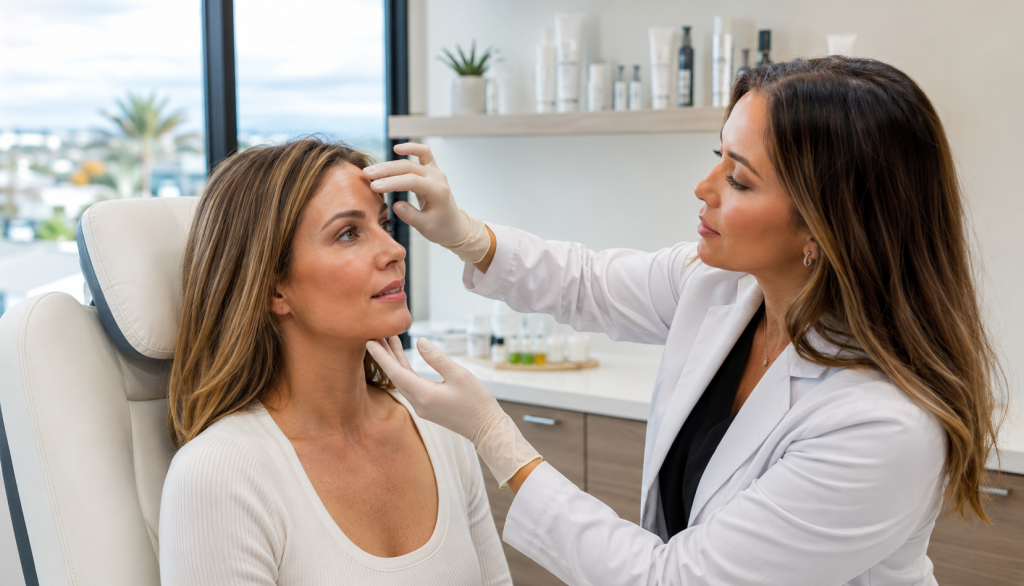
Skincare and Botox address different aspects of facial aging, so one is not automatically better than the other. Skincare primarily supports the skin itself by improving hydration, texture, pigmentation, fine lines, and protection from environmental damage. Botox temporarily reduces specific expression lines by limiting targeted muscle activity. For many adults, the most effective approach isn’t skincare or Botox alone, but a personalized combination of both.
ALCHEMĒ Medical Spa
ALCHEMĒ Medical Spa Del Mar offers both Botox and professional skincare-focused aesthetic services, making the comparison especially relevant for patients deciding how to address signs of aging. The practice lists Botox, customized facial treatments, chemical peels, RF microneedling, and medical-grade skincare among its aesthetic offerings.
ALCHEMĒ’s Del Mar website currently advertises a free personalized consultation plus $50 off a first service, with exclusions applying and limited availability. Because promotions can change, patients should confirm eligibility when booking.
Quick Takeaways
- Skincare works primarily on the skin’s surface and underlying skin health, while Botox targets muscle activity that contributes to expression lines.
- Daily broad-spectrum SPF 30+ is one of the most important components of an anti-aging skincare routine.
- Retinoids can help improve mild fine lines, uneven pigmentation and skin texture over time.
- Botox Cosmetic is FDA-approved for the temporary improvement of several types of facial lines in adults, including forehead lines, crow’s feet and glabellar lines.
- Skincare and Botox can complement, not replace, one another because they address different causes and signs of facial aging.
- A personalized consultation can help determine whether skincare, Botox, or a combination makes sense for your concerns.
What Is the Main Difference Between Skincare and Botox?
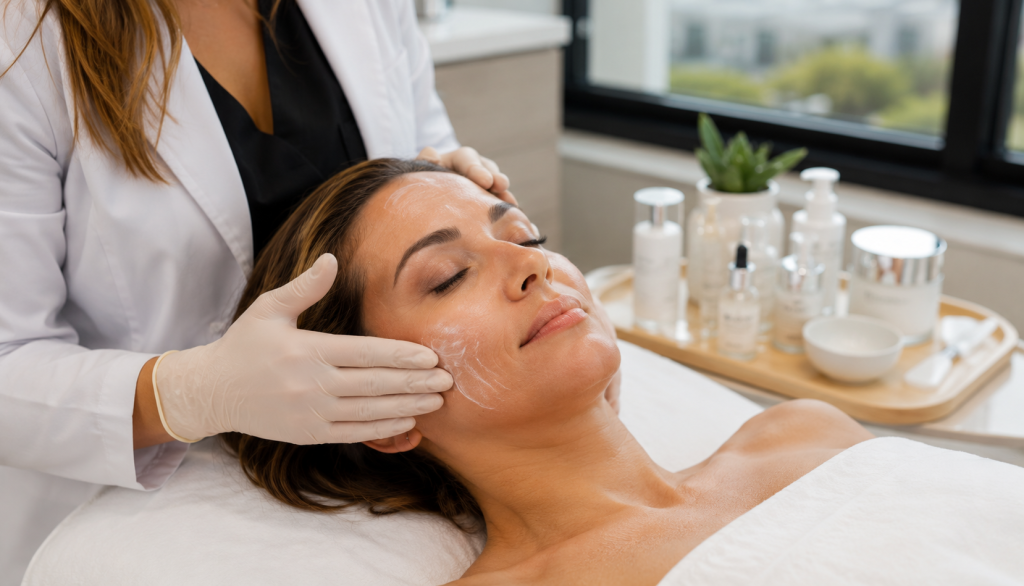
The main difference is what each approach treats. Skincare works directly on the skin and can support hydration, texture, pigmentation, acne management, and protection from environmental damage. Botox Cosmetic is an injectable prescription treatment that temporarily reduces targeted muscle activity, making certain expression lines appear less noticeable.
The FDA states that Botox Cosmetic is used in adults to temporarily improve moderate-to-severe frown lines between the eyebrows, crow’s feet, and forehead lines, as well as certain other approved treatment areas.
Skincare takes a broader approach. Depending on the ingredients or professional treatment used, it may target dryness, discoloration, rough texture, acne, fine lines or sun-related changes.
For example, the American Academy of Dermatology notes that retinoids can improve mild fine lines, pigmentation irregularities and skin texture.
That difference matters because a moisturizer cannot relax an overactive facial muscle, while Botox isn’t designed to moisturize dry skin, reduce pigmentation, or replace daily sun protection.
Which Is Better for Wrinkles, Skincare or Botox?
Botox may be more directly suited to expression-related wrinkles, while skincare is essential for improving and protecting the skin itself. If wrinkles show up when you frown, squint, or raise your eyebrows, muscle activity may be contributing. If your concern involves fine texture, dryness, or sun damage, skincare may play a larger role.
The American Academy of Dermatology recognizes multiple approaches to wrinkles, including moisturizers, prescription retinoids, Botox, fillers, chemical peels and resurfacing treatments. This reflects an important reality: facial aging rarely comes from a single cause.
Consider the distinction this way:
| Concern | Skincare | Botox |
|---|---|---|
| Forehead expression lines | May soften overall skin appearance | Often more directly targeted |
| Crow’s feet caused by movement | Limited effect on muscle activity | Specifically FDA-approved for temporary improvement |
| Dryness | Helpful | Not designed to treat it |
| Uneven texture | Often helpful | Not its primary purpose |
| Dark spots/pigmentation | Certain skincare can help | Not designed for pigmentation |
| Preventing UV-related aging | Daily sunscreen is essential | Does not replace sun protection |
| Frown lines between eyebrows | Skincare may support overall skin quality | FDA-approved treatment area |
Individual treatment suitability and results vary, so view this table as a decision-making guide rather than a personalized treatment recommendation.
What Can a Good Skincare Routine Do That Botox Cannot?
A consistent skincare routine can protect against UV damage, maintain hydration, improve texture, and address concerns such as pigmentation that Botox does not treat. Skincare is therefore important even for someone who regularly receives Botox.
One simple example is sunscreen. The American Academy of Dermatology recommends broad-spectrum, water-resistant sunscreen with SPF 30 or higher and notes that sun protection helps prevent premature skin aging, including wrinkles and age spots.
Moisturizer can also make some fine lines appear less noticeable by trapping water in the skin. Retinoids go further by encouraging skin-cell turnover and supporting collagen, which can improve fine lines, pigmentation and texture.
A practical anti-aging skincare foundation may therefore include:
- Gentle cleansing appropriate for your skin type.
- Moisturizer selected for your individual skin needs.
- Broad-spectrum SPF 30+ every morning.
- Targeted active ingredients where appropriate.
- Professional guidance if you have acne, persistent pigmentation, irritation, or other skin concerns.
Using Botox does not remove the need for any of these fundamentals.
What Can Botox Do That Skincare Cannot?
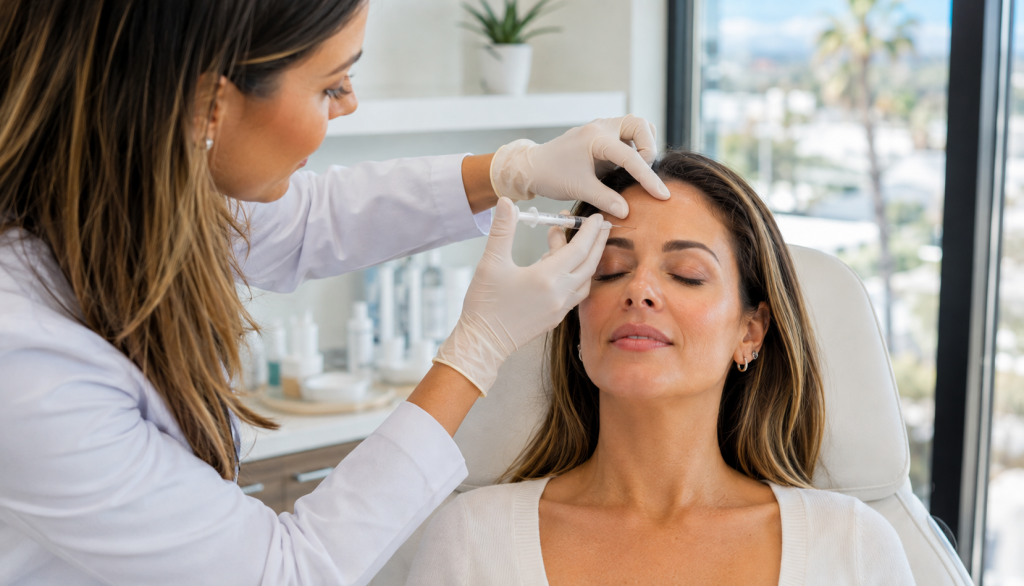
Botox can temporarily reduce the muscle activity behind certain dynamic facial lines, something topical skincare products cannot do in the same way. That makes Botox particularly relevant for expression lines around the forehead, between the eyebrows, and around the eyes.
The FDA explains that cosmetically used botulinum toxin products work by keeping targeted muscles from tightening as strongly, making associated wrinkles less visible.
This is fundamentally different from applying an anti-aging cream.
A retinoid may gradually improve fine lines and skin quality, but it does not function like a neuromodulator. Similarly, Botox can soften targeted movement-related lines, but it does not exfoliate the skin, correct sun spots, or replace moisturizer.
Botox is also a medical treatment rather than a cosmetic product you simply add to a home routine. Potential adverse effects can occur, including localized discomfort, swelling, bruising and, less commonly, effects such as eyelid or brow drooping. The FDA prescribing information includes important safety information, contraindications, and warnings that you should discuss with a qualified provider.
Should You Start With Skincare Before Botox?
For many people, building a consistent skincare foundation makes sense, even if you eventually add Botox. Sunscreen, moisturizer, and appropriately selected active ingredients support long-term skin health, while Botox can later address specific movement-related lines if they remain a concern.
The American Academy of Dermatology recommends starting an anti-aging routine with sunscreen and moisturizer and then focusing on the specific aging concern that bothers you most.
That creates a useful decision process:
Choose skincare as your immediate priority if: your main concerns are dryness, dullness, uneven tone, pigmentation, mild texture changes, or maintaining healthy-looking skin.
Consider discussing Botox if: your main concern is expression-related forehead lines, frown lines or crow’s feet that remain noticeable despite a good skincare routine.
Consider both if: you want to address skin quality and expression lines as separate parts of a broader aesthetic plan.
Age alone should not determine the decision. Your skin condition, facial movement, treatment goals, medical history, and preferences matter more than reaching a particular birthday.
Can You Use Skincare and Botox Together?
Yes. Skincare and Botox can complement each other because they address different aspects of facial aging. A skincare routine supports skin condition and appearance, while Botox targets specific muscle activity. Combining approaches may therefore make sense when someone has concerns involving both skin quality and expression lines.
This does not mean everyone needs both.
Someone primarily concerned with early sun damage and uneven tone may benefit more from skincare-focused strategies. Someone with healthy skin whose primary concern is a pronounced frown line may want to discuss a neuromodulator with a qualified provider.
The American Academy of Dermatology notes that dermatologists often use more than one type of treatment for signs of sun-damaged and aging skin because different treatments address different concerns.
The goal should be to select treatments that solve a specific problem—not to accumulate as many treatments as possible.
How Do You Know Which Option Is Right for You?
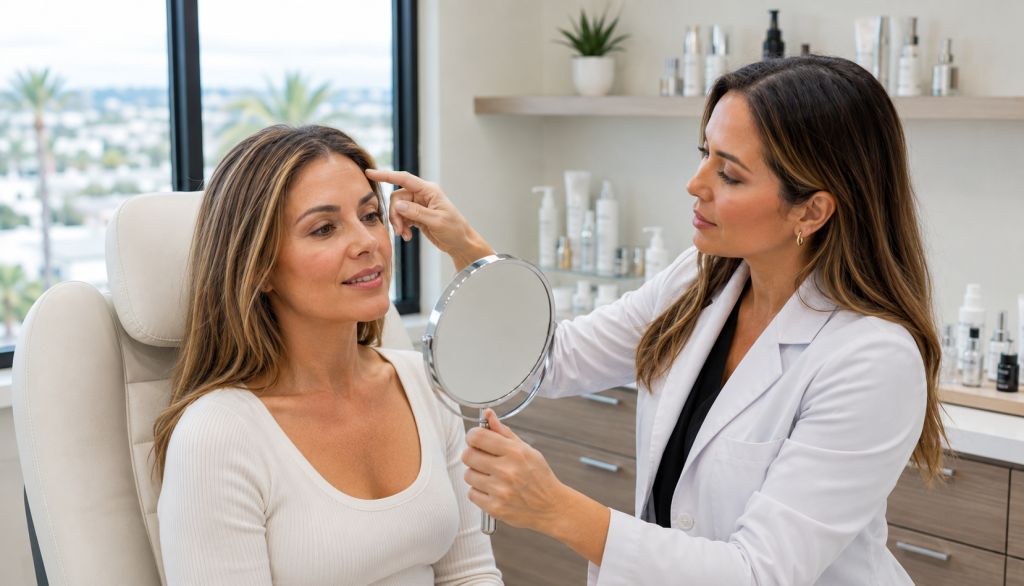
Start by identifying exactly what you want to change. If you can describe the concern clearly—such as forehead movement lines, rough texture, pigmentation, dryness, or crow’s feet—it becomes much easier to determine whether skincare, Botox, or another treatment is most appropriate.
A simple way to think about the decision is:
| Your Main Goal | Option to Discuss |
| Maintain healthy-looking skin | Consistent skincare |
| Prevent UV-related premature aging | Daily sun protection |
| Improve mild pigmentation or texture | Targeted skincare/professional skin treatments |
| Address expression-related forehead lines | Botox consultation |
| Address crow’s feet | Botox consultation |
| Improve both skin quality and expression lines | Combined treatment plan |
Some concerns also don’t respond well to basic skincare or Botox alone. Skin laxity, deeper pigmentation, acne scarring, volume loss, and significant texture changes can require completely different approaches.
That is why treatment selection should start with the concern, not the treatment trend.
Why Choose ALCHEMĒ Medical Spa Del Mar for Skincare and Botox?
ALCHEMĒ Medical Spa Del Mar is relevant for patients considering skincare vs Botox because the practice offers both neuromodulator treatments and skin-focused aesthetic options. Its published services include neuromodulators, RF microneedling, and other aesthetic treatments, while the practice also sells medical-grade skincare products.
ALCHEMĒ’s Del Mar service information specifically lists Botox alongside dermal fillers and describes customized skincare options for concerns including signs of aging, pigmentation, acne scars and sun damage. Its Del Mar location is listed at 12895 Paseo Village Way, Suite 1240, San Diego, CA 92130.
Independent sources provide additional corroboration. Apple Maps lists ALCHEMĒ as a medical spa at the same One Paseo address and specifically identifies Botox among its services. MedSpa Scout likewise lists the Del Mar location for Botox, microneedling, and other aesthetic treatments and notes that free consultations are available.
Frequently Asked Questions
Can Botox replace an anti-aging skincare routine?
No. Botox does not replace sunscreen, moisturizer or targeted skincare. It can temporarily improve certain expression lines, but it does not provide UV protection or directly address dryness, uneven pigmentation and many texture concerns. Daily skincare remains important even if Botox is part of an aesthetic treatment plan.
Is retinol as effective as Botox for forehead wrinkles?
Retinol and Botox are not interchangeable treatments. Retinol is a type of retinoid used to improve concerns such as mild fine lines, pigmentation and texture, while Botox temporarily targets the muscle activity associated with specific expression lines. The better choice depends on what is causing the wrinkle and what result you want.
At what age should you consider Botox?
There is no universal age at which everyone should start Botox. Treatment decisions should be based on individual facial anatomy, expression patterns, concerns, medical suitability and aesthetic goals rather than a predetermined age. Botox Cosmetic is a prescription medicine indicated for adults for specific approved cosmetic uses.
Is sunscreen really important if you get Botox?
Yes. Botox does not protect your skin against ultraviolet radiation. The American Academy of Dermatology recommends broad-spectrum, water-resistant SPF 30 or higher to help protect against sunburn, skin cancer and premature aging such as wrinkles and age spots. Sun protection remains important regardless of which cosmetic treatments you choose.
Should I get Botox if I only have fine lines?
Not necessarily. Mild fine lines may sometimes be addressed through skincare or other skin-focused treatments, depending on their cause. Retinoids, for example, may improve mild fine lines along with texture and pigmentation. If lines are primarily caused by repeated facial movement, a Botox consultation may help clarify whether treatment is appropriate.
Build a Personalized Skincare and Botox Plan at ALCHEMĒ Del Mar
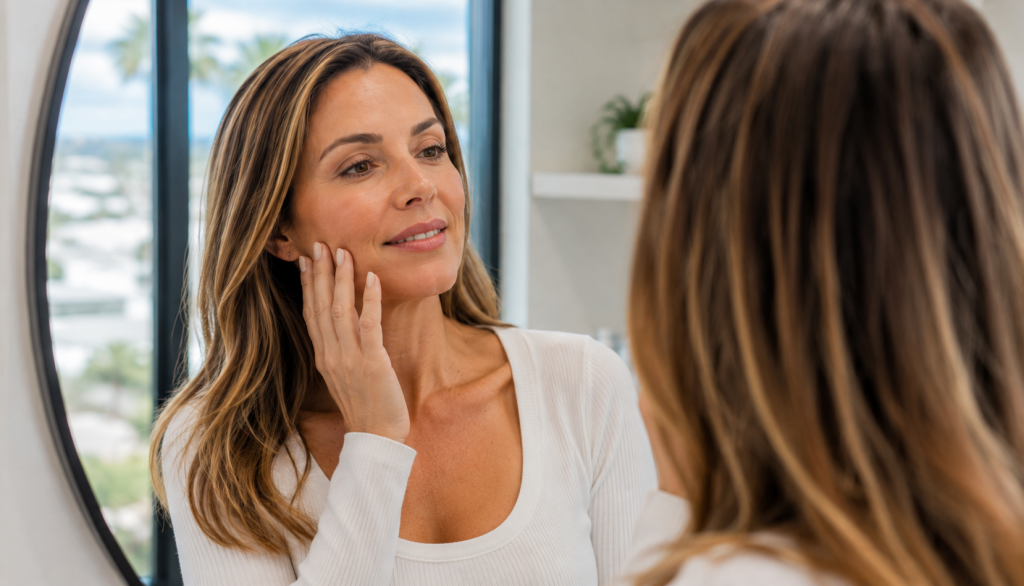
Choosing between skincare and Botox does not have to be an either-or decision. Skincare supports the health, protection, texture and appearance of your skin, while Botox addresses specific expression-related lines through a different mechanism. The right plan depends on what you see in the mirror, what you want to improve and which treatments are appropriate for you.
If you’re ready to experience personalized, science-backed beauty and wellness, visit Alcheme MedSpa Del Mar location for your first treatment. Be sure to bring your coupon to show the receptionist and enjoy your introductory savings, whether you choose 20 percent off your first visit, 75 dollars off your first service, or 20 percent off NAD therapy. It’s the perfect time to start feeling and looking your best.
ALCHEMĒ Medical Spa Del Mar
12895 Paseo Vlg Wy, San Diego, CA 92130